
Bali and Punta Cana sit almost exactly on opposite sides of the planet. They are separated by eleven thousand kilometres, a twelve-hour time difference, two languages and two entirely different legal systems for owning land.
They also share a specific commercial reality. Both are tropical destinations where a significant share of real estate is bought by people who do not live there, will not visit often, and are making a decision about a place they may have seen for a single week of their lives.
That shared condition is why a working relationship between an architecture practice based in Indonesia and a real estate company based in the Dominican Republic is less improbable than it first sounds.
Bali has been absorbing international capital for long enough to have developed its own patterns. Buyers understand leasehold structures. There is a visible stock of comparable villas and boutique resorts. The hard constraints — zoning, setbacks, height limits near the coast, the practical realities of building on volcanic terrain — are known quantities that a competent local team navigates routinely.
The Dominican Republic operates differently. Freehold ownership is available to foreign buyers, which removes a category of friction that dominates conversations in Indonesia. The tourism volume arriving through Punta Cana is very large and heavily concentrated in resort formats. Land in some areas is still traded on relationships and local knowledge rather than through a transparent, indexed market.
Underneath those differences, the same question keeps surfacing. Someone has, or can obtain, a piece of land. What should actually be built on it, and how do you demonstrate that convincingly to a buyer or an investor who is not standing on the site?
Most of the time that question gets answered badly, in one of two ways. Either the land is sold as land, with the value of what could be built on it left entirely to the buyer's imagination. Or a generic scheme is drawn to fill the plot, with no particular relationship to the terrain, the market segment or the operating model.
The partnership with Buy Home Punta Cana exists to answer that question properly, and it works because the three parties are not trying to do each other's jobs.
Buy Home Punta Cana is a real estate company based in Punta Cana, founded and directed by Valerio D'Angelo. It sources properties, development land and local opportunities, and it maintains the relationships with buyers, investors and the network of professionals through which most of these transactions actually move.
This is not a function that can be performed remotely, and it is not a function an architect performs. Knowing which parcel is genuinely available, what the seller will realistically accept, which neighbouring plot is about to change hands and which permit path is plausible is local work. I participate in the company as a shareholder and strategic architecture partner, which is a different role from the one Valerio holds, and deliberately so.
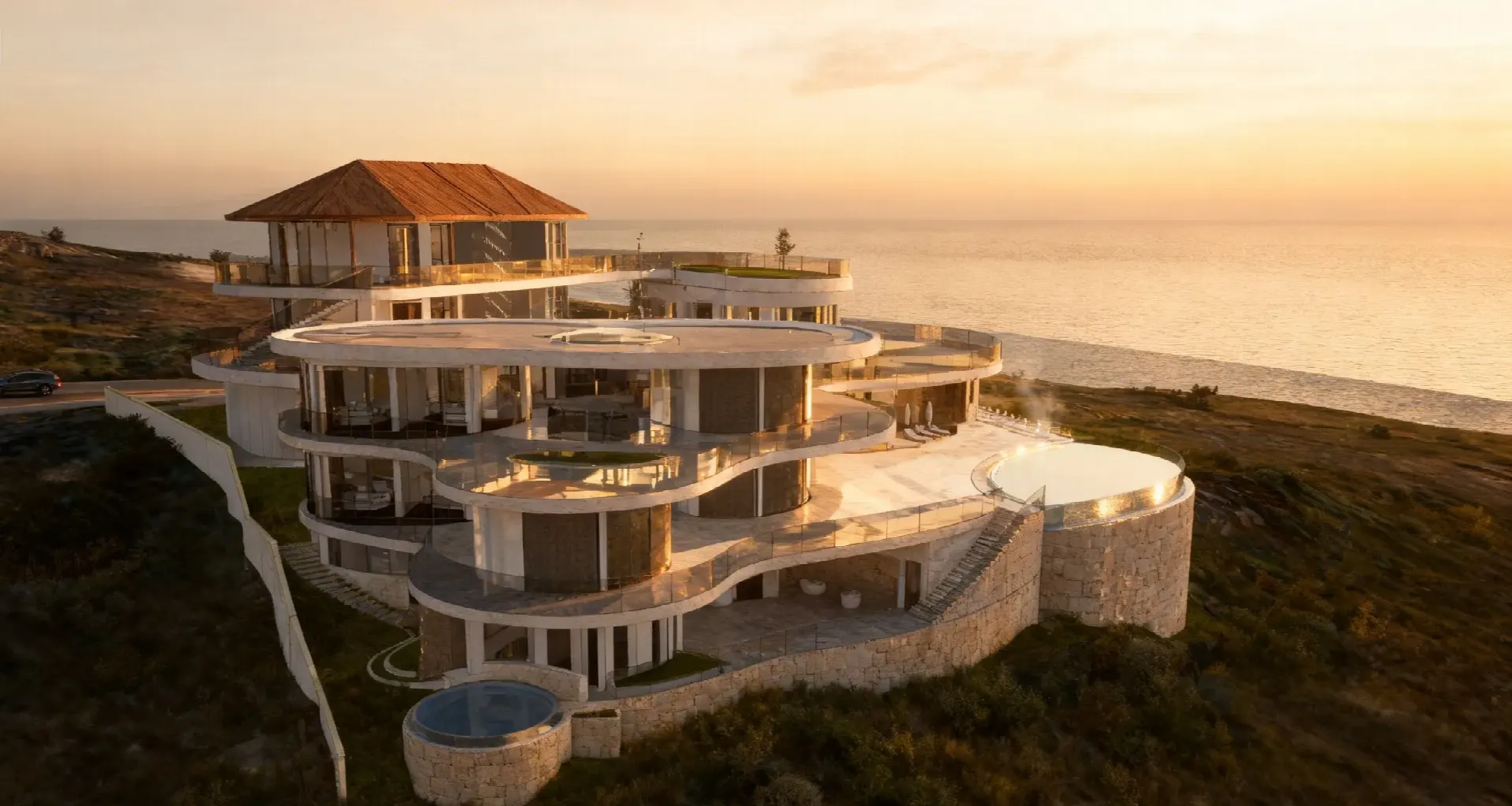
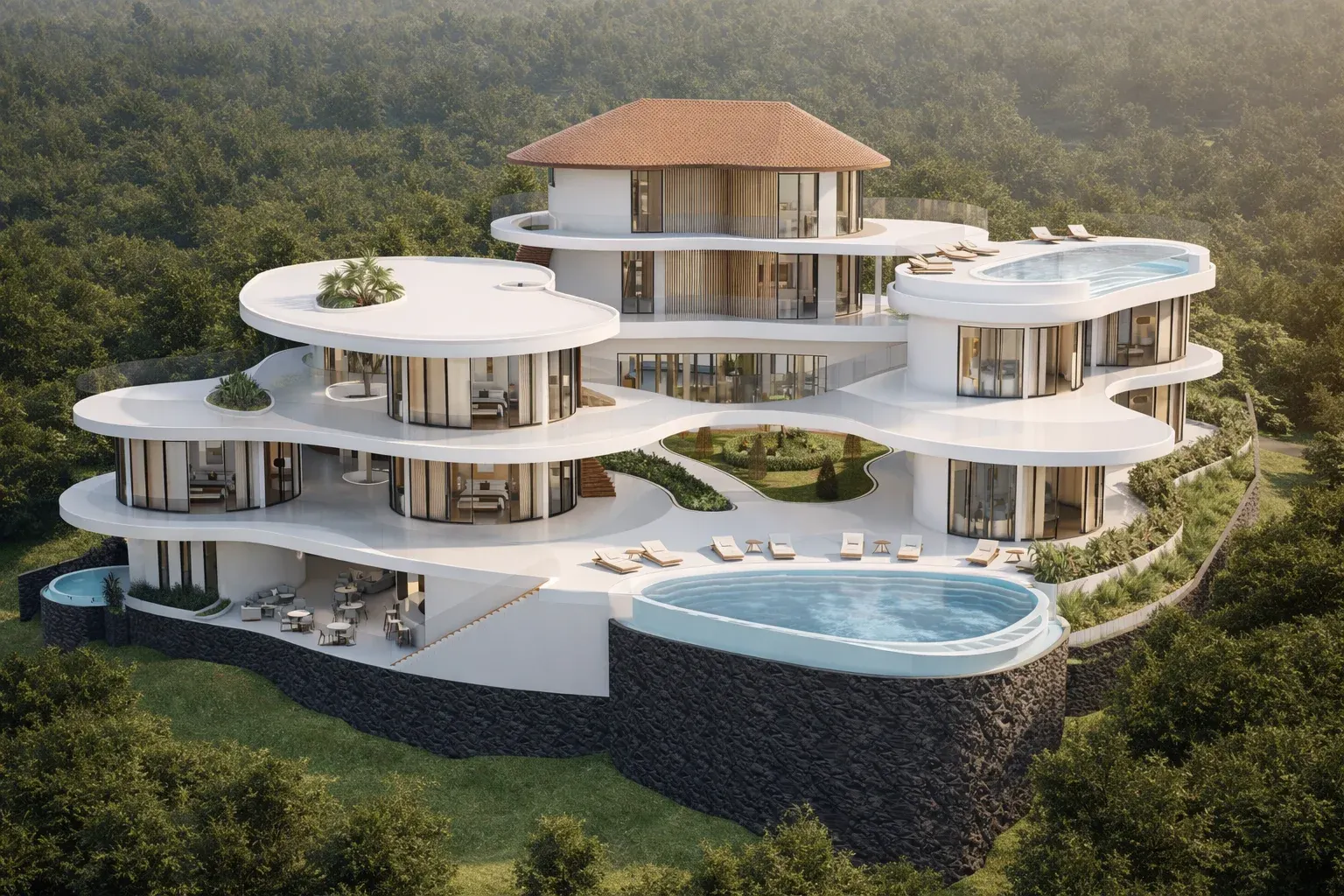
My contribution begins where the opportunity has been identified. Feasibility, architectural vision, masterplanning, resort and residential design, development strategy, international creative direction.
In practice the first useful output is rarely a design. It is a sober assessment of what the site can carry and who it is for. A plot that supports fourteen small units and a plot that supports six generous ones are two different businesses, with different buyers, different build costs, different operating profiles and different exit paths. Choosing between them is a strategic decision that happens to be expressed in architecture.
The third contribution is Virtuard Reality Design: 3D visualization, virtual tours, Unreal Engine experiences, digital presentations and online visibility.
This is what makes the other two useful at a distance. A concept that exists only as drawings is legible to perhaps one person in twenty. The same concept as a navigable environment is legible to almost everyone, which matters enormously when the buyer is in Milan, the investor is in Toronto and the land is in the Dominican Republic.
The sequence, when it runs properly, looks like this.
A property or parcel is identified locally. A preliminary development analysis establishes what the site can physically and legally accommodate. Feasibility and positioning determine what should be built and for whom. An architectural concept gives that answer a form. Masterplanning organises it. Residential, hospitality or mixed-use design resolves it. Then 3D visualization, cinematic presentation, virtual tours and immersive experiences make it communicable — first to investors and buyers, then through international digital marketing.
What is worth emphasising is the order. The visualization comes last, and it visualizes a decision that was already made on other grounds. Reversing that order — starting with an attractive image and reverse-engineering a project to justify it — is a common failure mode in destination real estate, and it produces developments that photograph well and perform badly.
Not everything transfers. Construction methods, labour availability, material supply chains, permit sequences and hurricane engineering requirements are specific and local. Nobody should assume a detail that works in Ubud works in Bávaro.
What does travel is the method: read the site honestly, define the buyer before defining the building, design to that definition, and then make the result understandable to people who cannot visit.
What also travels is an understanding of the international buyer, because to a significant degree it is the same person. Someone considering a villa in Bali and someone considering an apartment in Punta Cana are often evaluating the same decision — a property abroad, in a warm climate, that has to work both as a place to use and as an asset to hold. The questions they ask are remarkably consistent, and most of them are questions a clear concept and an honest visualization can answer before anyone books a flight.
It is worth being precise, because destination real estate attracts a great deal of imprecision.
This is a corporate participation and a working partnership between professionals with complementary skills. It is not a fund, not a public offering and not a solicitation. Individual opportunities are exactly that — individual — and each one is subject to its own due diligence, its own contracts and its own legal review. Nothing about a partnership structure changes the obligations that attach to a specific transaction.
What the partnership does change is the quality of the starting point. Instead of a plot of land with an asking price, the conversation begins with a plot of land, an assessment of what it can support, a concept designed for a defined buyer, and a way to show that concept to someone on the other side of the world.
From opportunity to vision, and from vision to project. That is the whole idea, and it turns out to work the same way in both hemispheres.
You can read more about the partnership on the Buy Home Punta Cana page, or visit Buy Home Punta Cana directly.
Terranova Caribbean Plazas II · Av. Barceló, Bávaro, Punta Cana, La Altagracia 41201, Dominican Republic
Get Directions · View on Google Maps Meetings and site visits by appointment.
Antonio Rutilio · Architecture & Design

Lead Architect & Founder. Merging Italian design excellence with tropical aesthetics to create unparalleled luxury spaces.

Send us your land size, location and development idea. We will help you understand what can be designed, developed and presented to investors or buyers.
Request a Feasibility ReviewWe are selecting strategic partners in key countries who can introduce clients, developers, investors, landowners and institutional opportunities.
Apply as Country PartnerContact Antonio Rutilio studio for an exclusive and confidential consultation on your next investment in Bali.
0 Comments