
Southeast Asia has become one of the most interesting laboratories for the future of sustainable architecture. Rapid urbanisation, intense tropical heat, monsoon rainfall and rising sea levels put pressure on buildings here long before they reach temperate climates. The response from architects, developers and governments across the region is a new generation of buildings that do not simply reduce their impact, but actively work with vegetation, water and climate.
This article looks forward: at the green technologies, design strategies and regulations that will shape the next decade of building in the region. If you are more interested in what is being designed and specified today, from materials to villa typologies and markets, read our companion piece on current architecture trends in Southeast Asia.
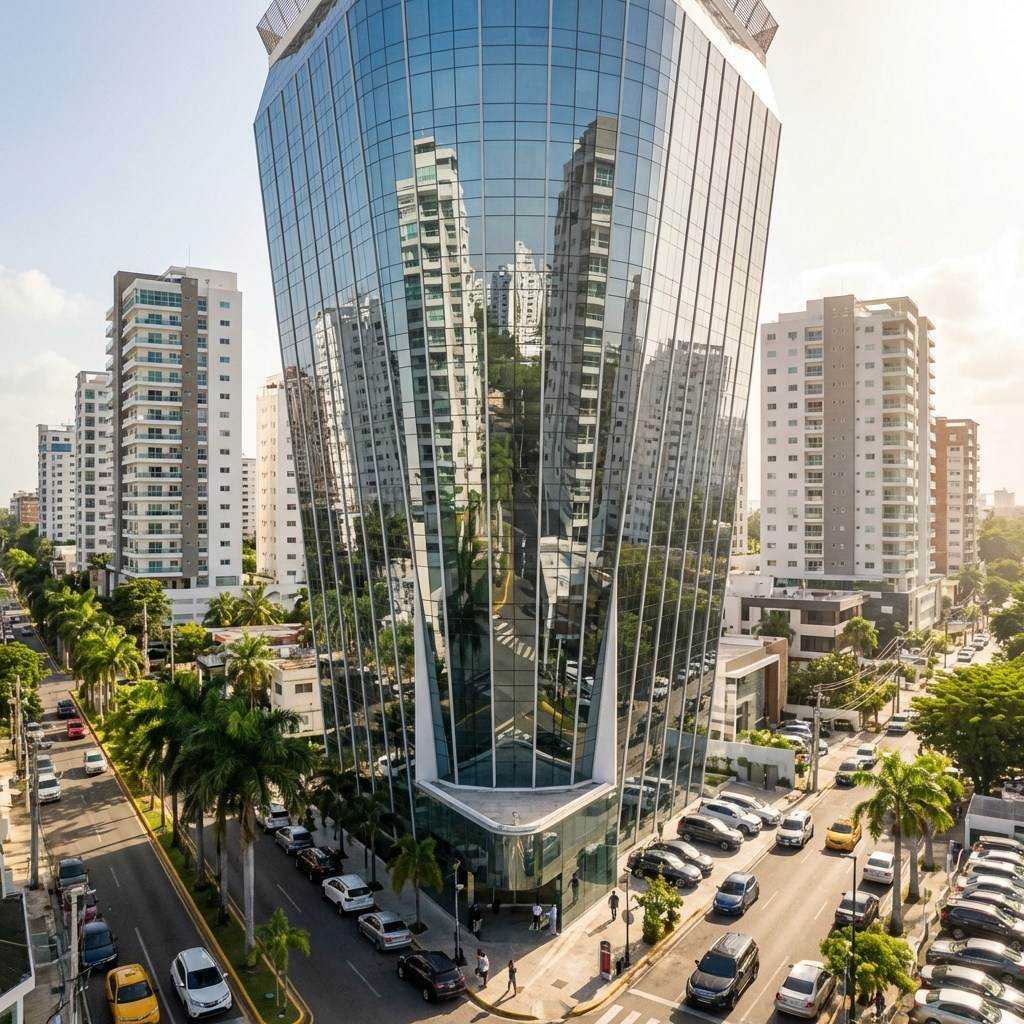
Southeast Asia is at the forefront of sustainable urban development. Countries like Singapore are integrating massive vertical gardens and solar technology directly into the facades of high-rises, turning towers into layered landscapes rather than sealed glass boxes.
Singapore is the clearest example of a city using architecture as green infrastructure. The Singapore-based practice WOHA has become a reference worldwide. Its Oasia Hotel Downtown is wrapped in a red mesh facade covered with climbing plants and has a green plot ratio of 1,100 percent: the planted surfaces on its facades and sky terraces add up to roughly eleven times the area of the site. Its earlier Parkroyal Collection Pickering uses cascading sky gardens to extend the adjacent park vertically through the building.
WOHA's Kampung Admiralty, a mixed-use complex for Singapore's ageing population that stacks healthcare, housing, shops and community spaces under green terraces, was named World Building of the Year at the World Architecture Festival in 2018. It shows that biophilic design is not only an aesthetic choice for luxury hotels, but a tool for public health and social life.
Singapore's government is pushing this direction through regulation. The Singapore Green Building Masterplan sets the "80-80-80 in 2030" targets: 80 percent of buildings by gross floor area to be green, 80 percent of new developments to be Super Low Energy buildings from 2030, and an 80 percent improvement in energy efficiency for best-in-class green buildings compared with 2005 levels.
At Jewel Changi Airport, Safdie Architects placed the 40-metre Rain Vortex, the world's tallest indoor waterfall, at the heart of a terraced indoor forest. The waterfall collects rainwater through an oculus in the glass roof, helps cool the air and the water is reused in the building. In Bangkok, landscape architect Kotchakorn Voraakhom and her studio Landprocess designed Chulalongkorn University Centenary Park, a gently tilted park that channels stormwater through sloped gardens and wetlands into a retention pond, helping to reduce flooding in the surrounding streets.
Both projects point to a key future trend: in the tropics, water will increasingly be treated as a resource to capture, store and display, rather than a problem to drain away as quickly as possible.
In Thailand and Indonesia, luxury is being redefined by sustainability. Bamboo architecture, zero-carbon footprints and complete off-grid capabilities are becoming standard requirements for high-end resort developments. Guests and investors increasingly expect a hotel or villa to prove its environmental credentials, not simply claim them.
Bali has played a pioneering role. Green School Bali, founded by John Hardy in the jungle near Ubud, showed the world that bamboo can support complex, large-scale architecture. Its spiralling Heart of School building became an icon of sustainable design. Since 2010, the campus's major structures have been designed by IBUKU, the studio founded by Elora Hardy, which has since built dozens of bamboo structures across Southeast Asia and beyond.
In Vietnam, Vo Trong Nghia Architects has explored similar ideas at a different scale. The firm's Farming Kindergarten near Ho Chi Minh City is organised under a continuous, walkable green roof with vegetable gardens and operates without air conditioning in its classrooms, relying on shading and cross-ventilation instead.
The next step beyond low-impact design is circularity. In Seminyak, Potato Head Studios, designed by OMA, incorporates recycled and reclaimed materials such as reclaimed timber and plastic waste, while the wider Desa Potato Head operates its own waste lab and recycling centre. The hotel is positioned as part of a creative village rather than a closed luxury enclave, a sign of how the resort typology itself is changing.
Looking ahead, several strategies are moving from experimental to expected in high-end tropical projects:
Sustainability starts at the design stage, when decisions are cheapest to change. As an Italian architect in Bali, Antonio Rutilio uses immersive visualisation built with Unreal Engine 5 and virtual reality to let clients walk through a project before it exists. Seeing how light moves through a living room at different hours, or how a shaded terrace feels in the afternoon, helps owners understand why a deeper roof overhang or a different orientation matters, and makes it easier to approve passive strategies that reduce energy use for decades.
This approach is especially valuable in luxury villa design in Bali, where clients are often abroad during design and construction. A virtual walkthrough replaces guesswork with a shared, precise understanding of the building.
For anyone planning a villa, resort or hospitality project in Indonesia, the future-facing lesson is clear: sustainability is becoming part of the definition of luxury, and part of long-term value. Buildings designed around the tropical climate are more comfortable, cheaper to run and more resilient to extreme weather. They also tell a stronger story to guests and buyers.
Tropical architecture that combines passive design, natural materials and carefully chosen technology will age better than buildings that depend entirely on air conditioning and imported finishes. You can explore how these principles translate into built work in our projects, and read more about the design language behind them in our article on tropical modernism and Italian luxury in Bali.
The future of sustainable architecture in Southeast Asia will not be defined by a single technology, but by an attitude: designing with the climate instead of against it, using local knowledge alongside digital tools, and treating vegetation and water as part of the architecture. Singapore's green towers, Bali's bamboo landmarks and Bangkok's water-absorbing parks each show a different piece of that future.
If you are planning a sustainable villa, resort or hospitality project in Bali or elsewhere in Indonesia, discover our architecture and visualisation services or contact the studio to discuss how your project can combine luxury, comfort and a lighter environmental footprint.
Antonio Rutilio · Architecture & Design

Lead Architect & Founder. Merging Italian design excellence with tropical aesthetics to create unparalleled luxury spaces.

Send us your land size, location and development idea. We will help you understand what can be designed, developed and presented to investors or buyers.
Request a Feasibility ReviewWe are selecting strategic partners in key countries who can introduce clients, developers, investors, landowners and institutional opportunities.
Apply as Country PartnerContact Antonio Rutilio studio for an exclusive and confidential consultation on your next investment in Bali.
0 Comments