Minimalism gets used loosely in real estate marketing to mean almost any building with white walls and few furnishings. As an architectural language, modern minimalism is more specific, and it has a real history: it descends directly from early twentieth-century modernism, and its discipline lies in what a building leaves out rather than what it includes.
Modern minimalism's roots trace to the modernist movement of the 1920s, particularly the Bauhaus school in Germany and architects like Ludwig Mies van der Rohe, who became associated with the phrase "less is more." Mies developed a language through the 1920s that combined an industrial, functionalist attitude toward materials with an aesthetic built on minimal, intersecting planes — rejecting the traditional idea of architecture as a sequence of enclosed rooms in favor of open, flowing space defined by structure rather than by walls. His 1929 Barcelona Pavilion remains one of the clearest early statements of this approach: steel, glass and stone used with almost no ornamentation, where the material itself and the precision of its assembly carry the design. That lineage — functionalism plus formal restraint — is still the reference point for minimal architecture today, even in a residential context far removed from Mies's original steel-and-glass pavilions.
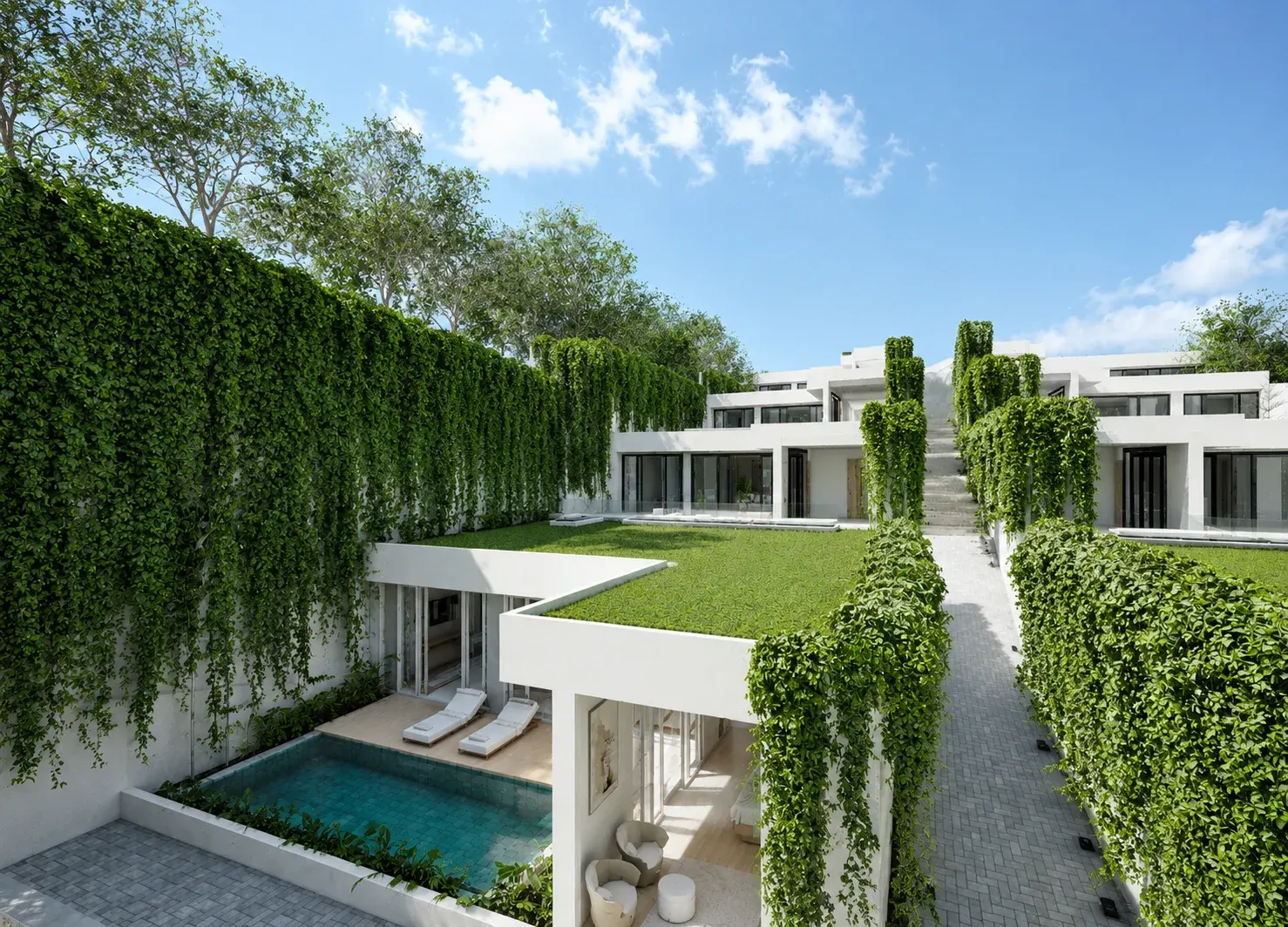
A minimal building is defined less by the absence of decoration than by a small number of design decisions applied with discipline: a restrained material palette, usually two or three materials used consistently rather than a different finish in every room; clean, uninterrupted lines with junctions and services carefully hidden or resolved rather than visible; and a clear structural logic that's legible in the finished building rather than concealed behind applied finishes. Space and proportion do the work that ornament would do in a more decorated style — a minimal building has to be right in its dimensions and light, because there's nothing else for the eye to rest on if the proportions are wrong.
Paradoxically, minimal architecture is often more demanding to design and build well than a more decorated style, because there's nowhere to hide an imperfect junction, a poorly proportioned room, or a material that doesn't read as intended in real light. Every visible edge, seam and shadow line becomes a deliberate decision rather than something a moulding or a busy pattern can distract from. This is why genuinely well-executed minimalism tends to require more design and construction-detail discipline than it appears to from a photograph, not less.
To discuss a project in this design language, get in touch. For minimalism applied specifically to high-end residential work, see minimalist luxury homes, and for how a premium design process is run more generally, visit premium residential design.
Contact Antonio Rutilio's studio for an exclusive and confidential consultation on your next investment in Bali.
Or start with a preliminary architecture cost estimate — a non-binding range for your villa, resort or hotel.