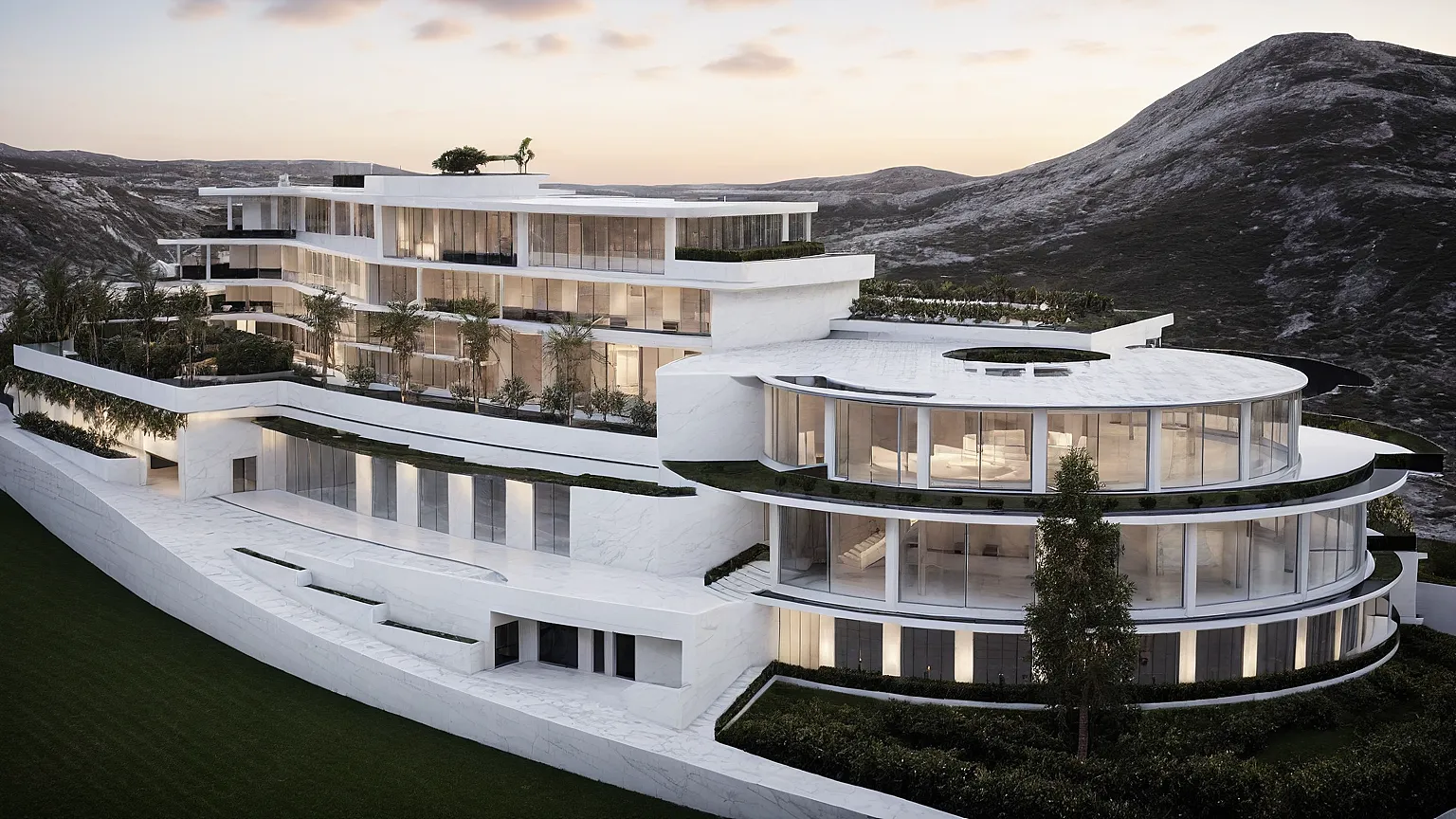
Minimalism gets reduced, in casual usage, to "less stuff" - fewer objects, fewer colors, fewer decorative gestures. That description misses what actually makes minimalist design difficult, and why it is often more expensive and more demanding to execute well than a more decorated approach. A room with nothing to distract from its proportions, materials and light has nowhere to hide a mistake. Every joint, every alignment, every material transition is fully visible, because there is no ornament competing for attention. Minimalism is a discipline applied to construction quality, not an absence of design effort.
In a more decorated interior, a slightly imperfect wall-to-ceiling junction can be softened by a cornice, a misaligned door can be disguised by surrounding detail, an uneven surface can be broken up visually by pattern or texture. Remove all of that, and every one of those imperfections becomes visible. This is why minimalist projects typically require tighter construction tolerances than more ornamented ones - flush skirtings, concealed door frames, continuous unbroken material runs - and why they tend to cost more per square meter to build well, not less. The "simplicity" the client experiences at the end is the product of construction complexity that has been deliberately hidden, not eliminated.
Because there are fewer materials and elements carrying the visual weight of the design, each one has to be chosen and detailed with more care, and has to work consistently across the entire project rather than in isolated moments. A stone selected for a floor has to read correctly against the concrete of a wall and the timber of a ceiling, in every room, in every light condition, for the whole design to hold together. A single wrong material choice is far more disruptive in a minimalist scheme, where it stands alone, than in a busier interior where it would simply be one element among many.
Generous, uncluttered space is expensive - it means paying for square meters that are not directly "productive" as storage or program, purely so that a room can breathe. This is one of the more honest ways in which minimalism is actually a form of luxury rather than an aesthetic preference divorced from cost: unused space, well-proportioned and well-lit, is a resource that has to be deliberately budgeted for rather than an accident of a smaller program. The same logic extends to storage - a minimalist home typically requires more, not less, considered joinery and storage planning, precisely so that everyday life does not visibly intrude on the clarity of the design.
Approached this way, minimalism is closer to a form of rigor than a style choice, and it rewards the same underlying design fundamentals - proportion, light, honest materials - discussed in what actually makes villa design luxurious. For how this level of precision is achieved through process, see what high-end residential design actually involves. To discuss a minimalist residential project, get in touch.
Contact Antonio Rutilio's studio for an exclusive and confidential consultation on your next investment in Bali.
Or start with a preliminary architecture cost estimate — a non-binding range for your villa, resort or hotel.