
True luxury is found in the details. When constructing a high-end property, the foundation and structural integrity must be flawless, especially in seismic zones like Indonesia. We prioritize advanced waterproofing techniques, high-grade concrete and precision engineering — because in the tropics, what you cannot see is exactly what decides whether a villa still looks and performs like new ten years after handover.
Beautiful renderings and a good material palette are only the beginning. As an Italian architect in Bali, I spend as much time on sections, junctions and specifications as on the overall concept. This article walks through the technical layers that separate a premium build from a standard one, from the ground up.
Indonesia sits on one of the most seismically active regions in the world, and Bali is no exception. Structural design must follow the national seismic standard, SNI 1726:2019, together with the Indonesian concrete code, and it should always be carried out by a qualified structural engineer.
Large openings and long cantilevers — typical of tropical modern architecture — make this coordination even more important. The architecture and the structure have to be designed together, not one after the other.
In Bali, water is the first enemy of any building. Heavy seasonal rain, high humidity and, near the coast, salt air test every junction. Most defects I see in existing villas come from water, not from structure.
Basements, retaining walls and ground slabs need a continuous waterproofing system, a vapour barrier under slabs and a proper drainage layer. Rising damp is one of the main causes of peeling paint, swollen joinery and mould at the base of walls.
Bathrooms, showers, roof terraces and balconies require membranes turned up at walls and thresholds, correct falls towards drains and careful sealing around every pipe penetration. Flush indoor–outdoor thresholds look effortless, but they only work with a recessed channel drain and a designed step-down in the structure.
Not every modern finish is suited to a humid climate. Resin floors, microcement and decorative coatings need the right substrate moisture, primers and UV-stable products. I cover this topic specifically in my article on epoxy resin in humid climates.
The roof protects the building from sun and monsoon rain, and in Balinese architecture it is also the dominant architectural gesture.
Custom glass facades elevate the aesthetic, but they are also a technical system. In a luxury villa I specify:
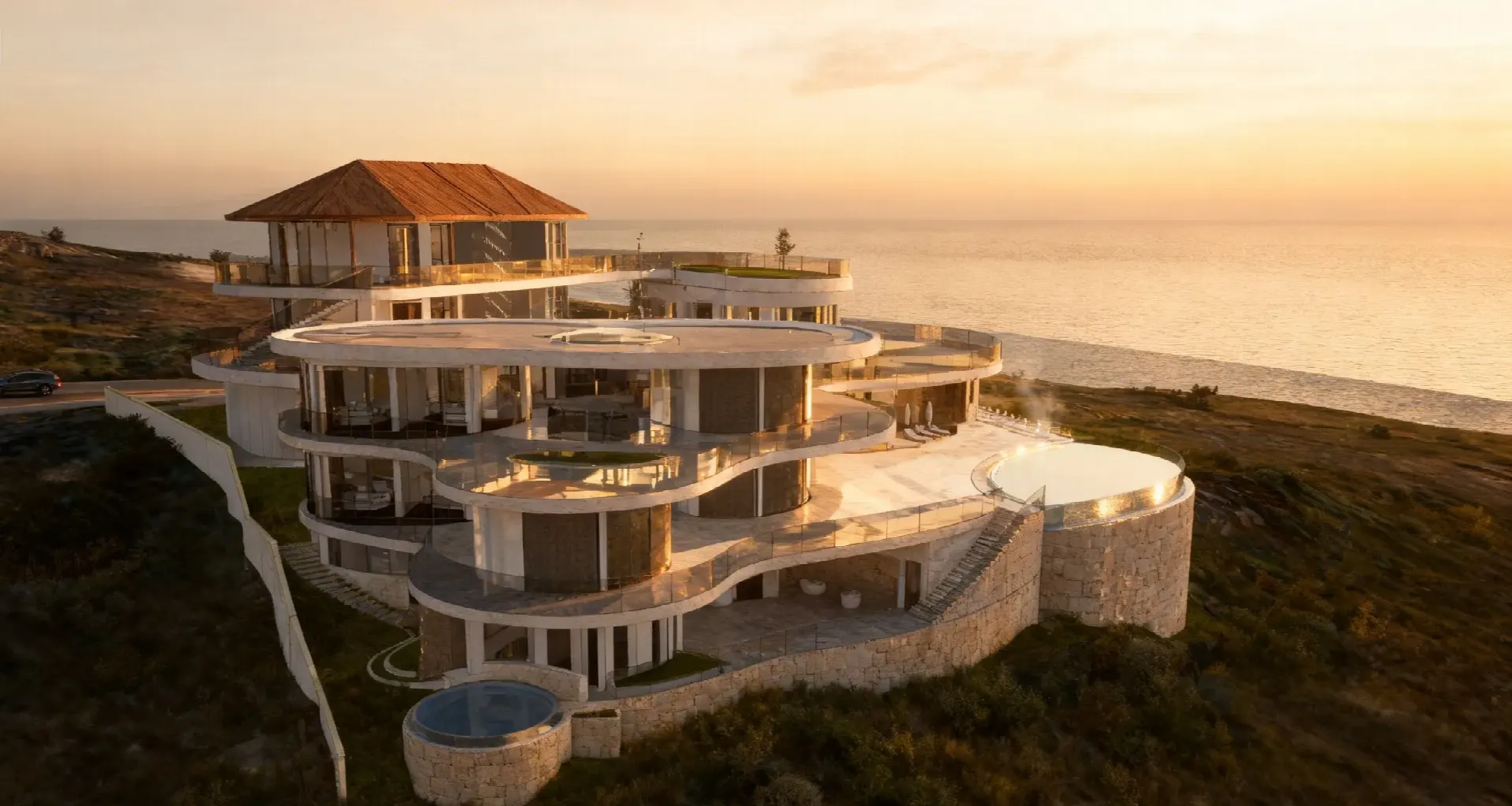
An infinity pool is often the signature of luxury villa design in Bali, and it is also one of the most technically demanding elements. A premium pool requires a reinforced concrete shell designed by the engineer, a complete internal waterproofing system before tiling, a properly sized balance tank for overflow and infinity edges, and an accessible plant room with filtration, pumps and, increasingly, salt or UV treatment. Finishes such as natural stone or glass mosaic must be installed with adhesives and grouts made for permanent immersion.
The hidden elements — like acoustic insulation and state-of-the-art HVAC systems — are what truly distinguish a premium build from a standard one. Mechanical, electrical and plumbing design deserves the same attention as the architecture.
Inverter or VRF air-conditioning systems with concealed units, dehumidification in closed rooms and wardrobes, and extraction in bathrooms and kitchens. Where possible, passive cross-ventilation reduces running time and energy use.
Reliable water supply, storage tanks, filtration, pressure pumps, hot water and properly designed wastewater treatment are essential, especially on sites with limited infrastructure.
Correctly sized distribution boards, surge protection, backup power where needed, and structured cabling for smart home, Wi-Fi and security. Service routes and access panels must be planned so that maintenance never requires breaking finishes.
Open-plan tropical living and hard materials such as stone and glass can create echo and noise transfer. Acoustic insulation in partition walls and ceilings, careful placement of mechanical equipment away from bedrooms, and soft finishes where needed make the difference between a villa that is impressive and one that is truly restful.
Using locally sourced teak wood, imported Italian marble and custom glass facades elevates the aesthetic while ensuring longevity — provided each material is used in the right place.
Shadow gaps instead of skirting boards, flush doors and hidden hinges, recessed lighting profiles, aligned stone joints, concealed drainage and carefully resolved corners — these are the details guests perceive as "quality" without always knowing why. They must be drawn precisely, agreed with the contractor and checked on site.
Even the best drawings can be lost in execution. Regular site supervision, mock-ups of key details, material approvals and inspections before each layer is covered (reinforcement, waterproofing, pipework) protect the design and the investment. This is a core part of my architecture and supervision services, and it is explained step by step in my guide on how to build a luxury villa in Bali.
A truly luxury villa is the sum of hundreds of correct decisions, most of them invisible. As an architect in Indonesia, my goal is to combine the aesthetic of Tropical Modernism with construction standards that let that aesthetic last.
If you are planning a villa or hospitality project and want every detail designed, specified and supervised with care, contact me to discuss your project.
Antonio Rutilio · Architecture & Design

Lead Architect & Founder. Merging Italian design excellence with tropical aesthetics to create unparalleled luxury spaces.

Send us your land size, location and development idea. We will help you understand what can be designed, developed and presented to investors or buyers.
Request a Feasibility ReviewWe are selecting strategic partners in key countries who can introduce clients, developers, investors, landowners and institutional opportunities.
Apply as Country PartnerContact Antonio Rutilio studio for an exclusive and confidential consultation on your next investment in Bali.
0 Comments