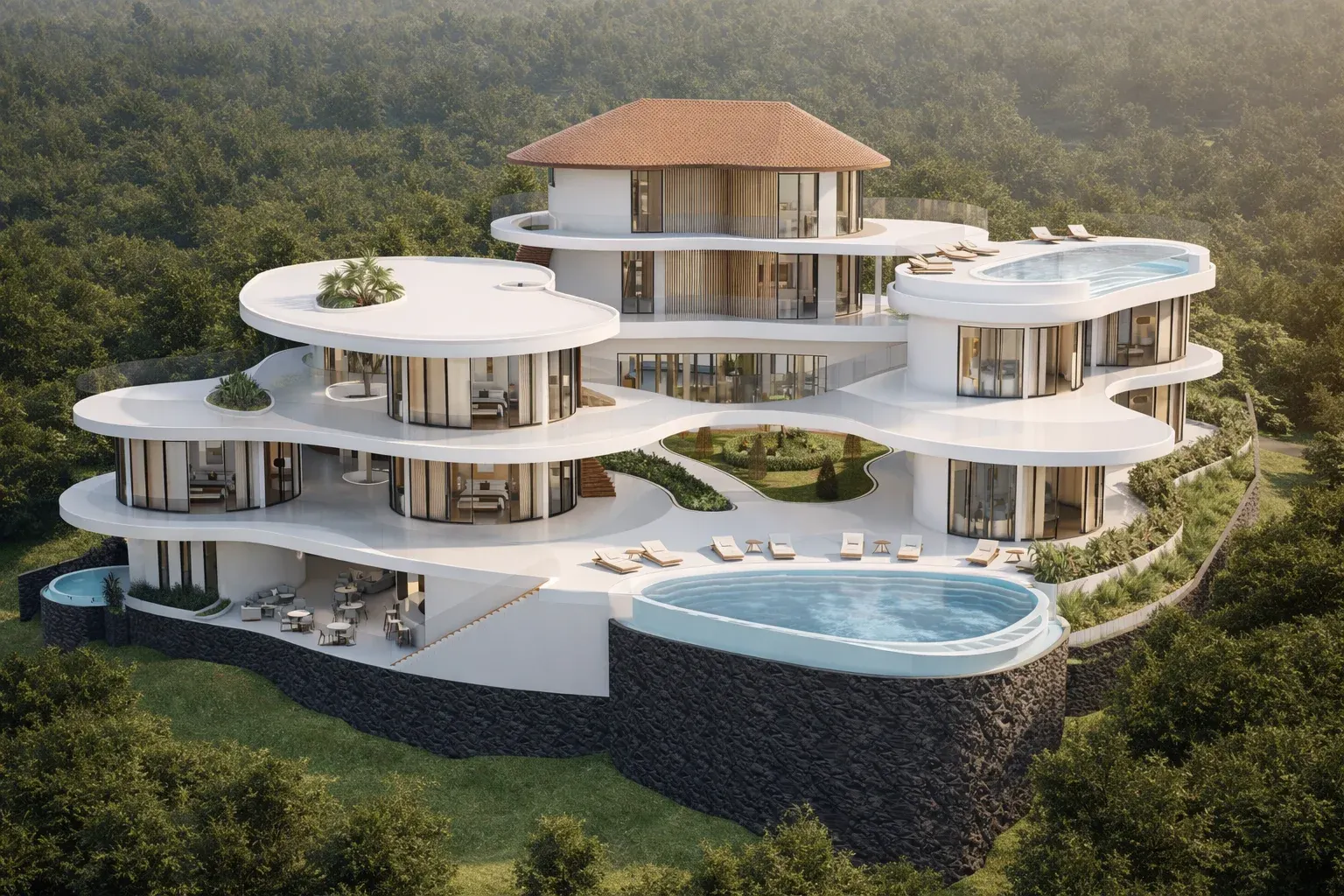
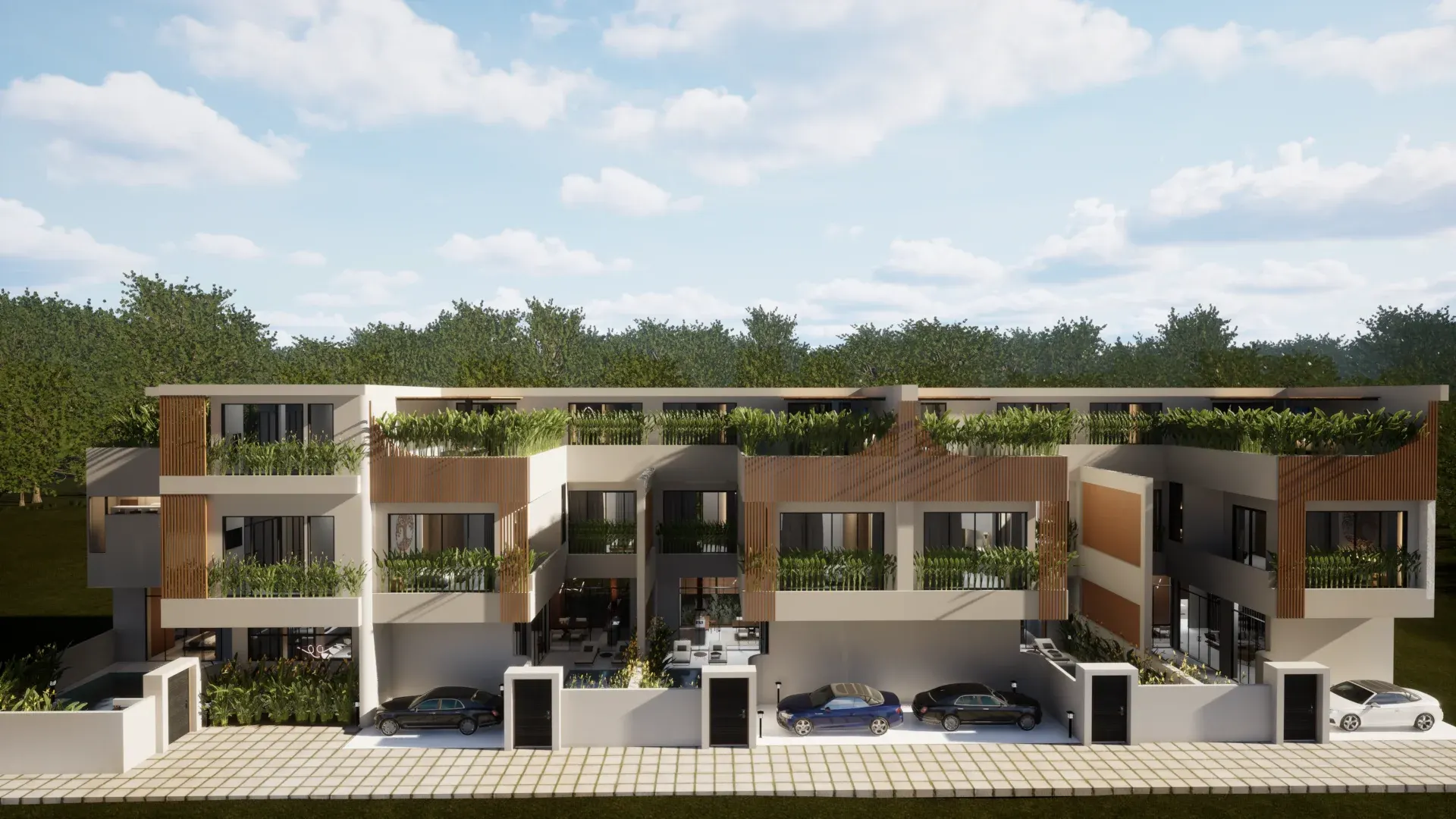
Designing a house for a family and designing a project for a developer are not the same discipline, even though both start with a site and end with drawings. A private client wants a home that fits their life. A developer needs a design that fits a business case — a buildable, sellable or leasable product that performs financially on a specific parcel of land, under a specific set of regulatory and market constraints. The architect's role in a development context starts earlier than most people assume, and it is judged by a different set of criteria.
Before a concept is sketched, a development-stage architect is usually reading the site the way an appraiser would: setback and height regulations, buildable area after easements and access roads, slope and soil conditions that will affect foundation cost, view corridors that add or subtract value unit by unit. Getting this wrong doesn't just produce an unbuildable design — it can undermine the financial assumptions the whole project was bought on. This due diligence work often happens in parallel with, or even before, a land purchase is finalized.
A private residence is designed around a known client. A development project is designed around a buyer or tenant profile that has to be inferred from market data — unit size expectations, price-per-square-meter thresholds, amenity expectations for the target segment, and how the product compares to what else is being built nearby. This is closer to product design than to bespoke residential design: the question isn't only "what makes a good villa" but "what mix of unit types, at what sizes and price points, will actually sell or rent in this specific micro-market."
Zoning limits, floor-area ratios, parking requirements and infrastructure capacity define an envelope the design has to work within. Part of the architect's job in a development context is finding the version of that envelope that maximizes usable, sellable area without pushing the design into a configuration buyers won't want — an efficient plan that nobody wants to buy isn't actually efficient. This is where architectural judgment and financial modeling have to stay in constant conversation rather than being handled in separate silos.
Every design choice on a development project gets tested against a pro forma. Materials, structural systems, and unit configurations get evaluated not just on their design merit but on their effect on construction cost per square meter, projected sale price, and timeline. An architect who understands this discipline can propose design moves that a developer's finance team will actually approve, rather than producing beautiful drawings that get value-engineered into something else entirely once the numbers come back.
If you're evaluating a site or an early-stage development concept and want an architect's read on its design and financial potential, reach out. For more on how specific design decisions affect project economics, see ROI-driven architecture, and for the investment framing of these decisions, real estate investment architecture.
Contact Antonio Rutilio's studio for an exclusive and confidential consultation on your next investment in Bali.
Or start with a preliminary architecture cost estimate — a non-binding range for your villa, resort or hotel.