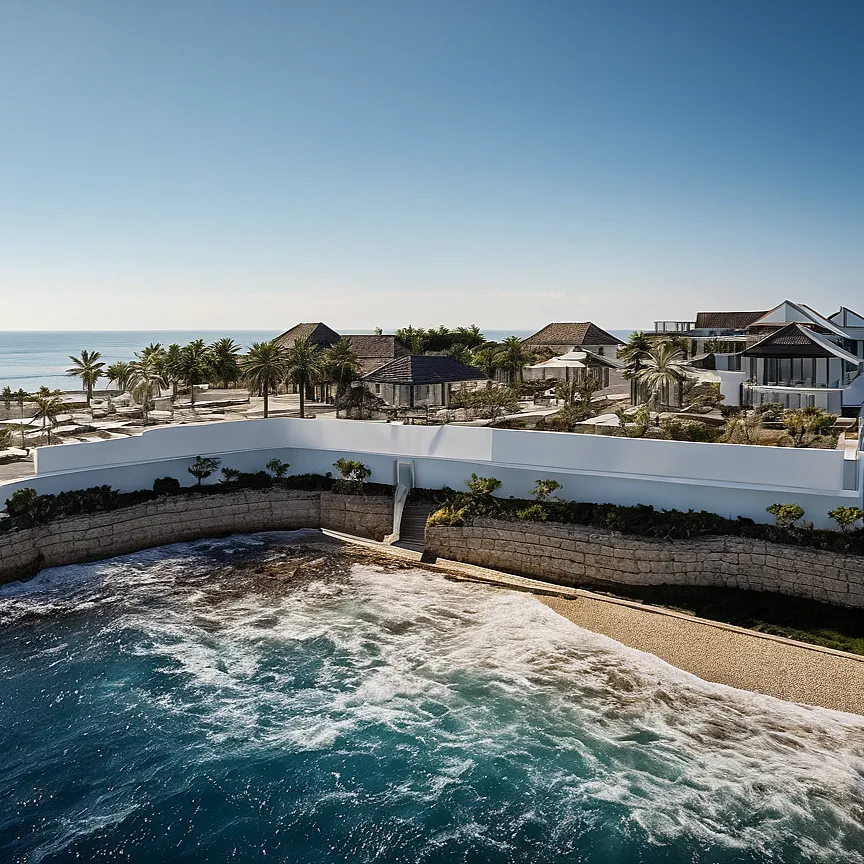
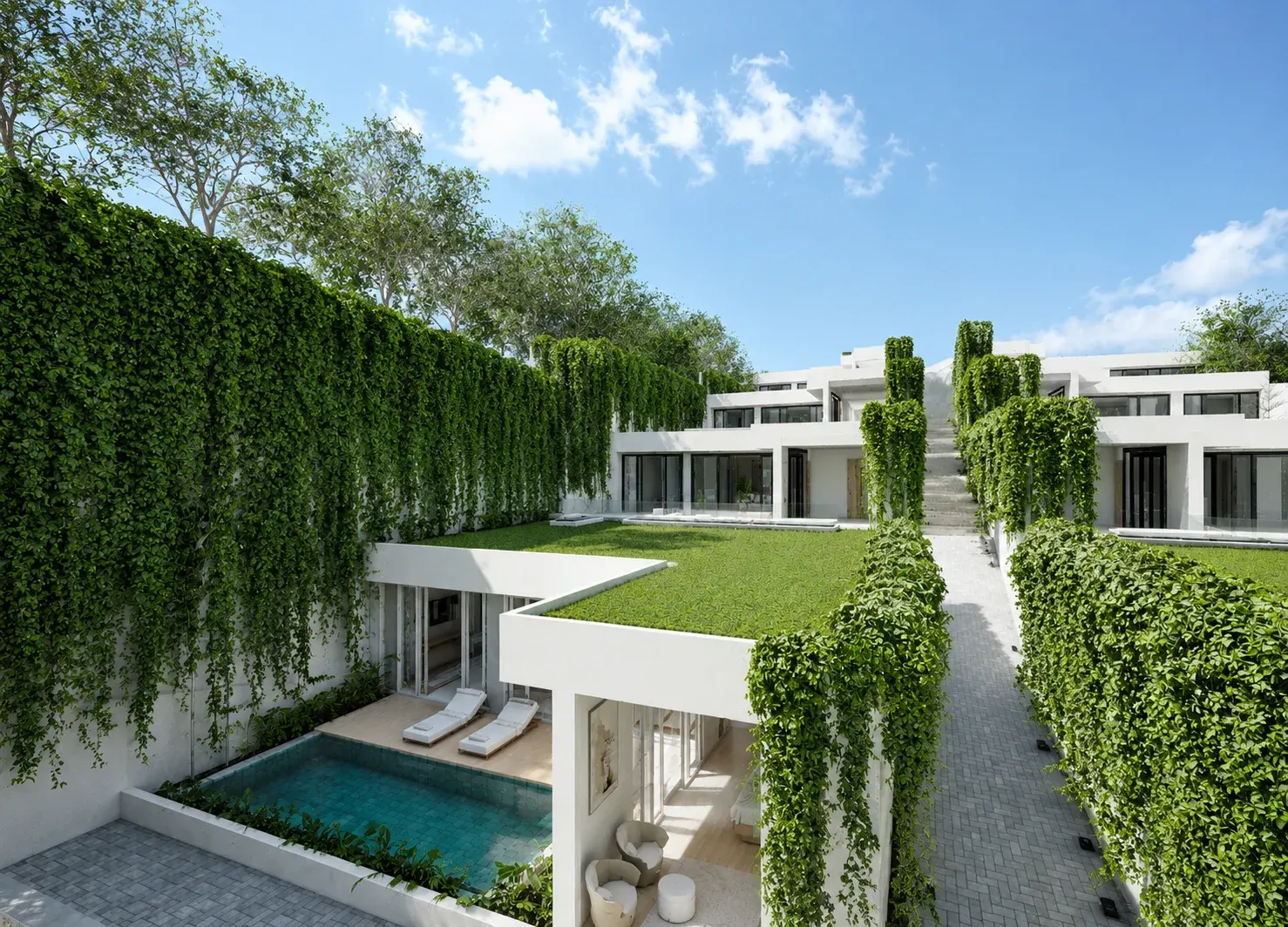
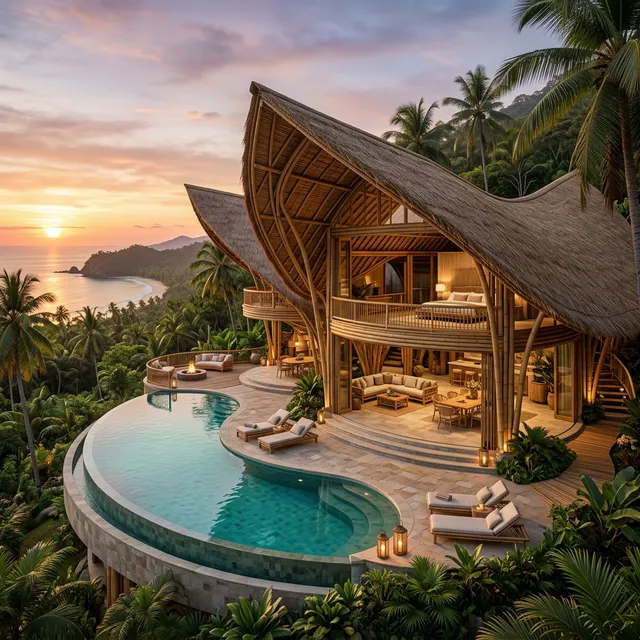
Luxury villa design in a temperate climate and luxury villa design in the tropics are answering different questions, even when the finish level and budget are identical. A design vocabulary borrowed from a cooler, drier climate — large sealed glass facades, certain stone or timber choices, mechanical-only cooling strategies — can look luxurious in a rendering and then perform poorly once it's actually built and occupied in heat and humidity. In the tropics, climate has to be a design input from day one, not a problem solved after the fact by adding more air conditioning.
Cross-ventilation — placing openings on opposite sides of a building so air moves through rather than around it — and stack ventilation, which uses the natural tendency of hot air to rise and exit through higher openings, are established passive cooling strategies in tropical architecture, not stylistic choices. Designing for them means deciding orientation, room adjacencies and window placement early, based on the site's actual prevailing breeze, rather than treating airflow as something the air-conditioning system will handle regardless of layout. A villa planned this way stays comfortable with less mechanical cooling, and feels genuinely connected to its setting rather than sealed off from it.
Deep roof overhangs, covered verandas, and shaded outdoor circulation are traditional tropical building responses precisely because they keep direct sun off walls and glazing before it ever becomes a cooling load. This is a more effective and more architecturally interesting strategy than relying on tinted glass or curtains to manage heat after it has already entered the building envelope. In a luxury context, shading elements also do double duty as usable outdoor space — a deep veranda is both a passive cooling device and a genuine living area.
Constant humidity, heavy seasonal rain and, near the coast, salt-laden air are hard on the wrong material choices — certain metals corrode faster, some stones stain or grow mold, and finishes not suited to the climate can fail within a few years regardless of how expensive they were. Selecting tropical-appropriate stone, timber species with genuine weather resistance, and detailing that manages water runoff properly is as much a part of a luxury result as the material's visual quality, because a beautiful finish that fails in three years was never actually luxurious.
The strongest tropical luxury villas tend to treat climate response and design language as the same problem rather than as separate concerns bolted together. A well-shaded, well-ventilated villa with a restrained, climate-appropriate material palette reads as more sophisticated — and ages better — than one that imports a colder climate's aesthetic and fights the tropics to keep it habitable.
To discuss a tropical villa project, get in touch. For the broader design principles behind high-end villa work, see luxury villa design, and for how a premium design process is structured more generally, visit premium residential design.
Contact Antonio Rutilio's studio for an exclusive and confidential consultation on your next investment in Bali.
Or start with a preliminary architecture cost estimate — a non-binding range for your villa, resort or hotel.